
They came out of nowhere and took the world by storm – beeswax wrappers. The food wrap you didn’t know you needed until you saw it on the shelf of some trendy spot, looked at all the pretty colours, and thought ooh yes cling film is a bit of a bother. But then you saw the price and thought ooh, well it’s not that much of a bother and I mean these wax things might not actually work right? And you left, but every now and then you think of those wrappers and wonder – did you make a mistake, should you have bought that perfectly patterned little life-saver, have you been needlessly wrapping everything in cling-film all this time, is your fridge bereft of little squares of waxy wonder, will you ever know the truth.
Worry no longer my friends, the day of enlightenment has come.
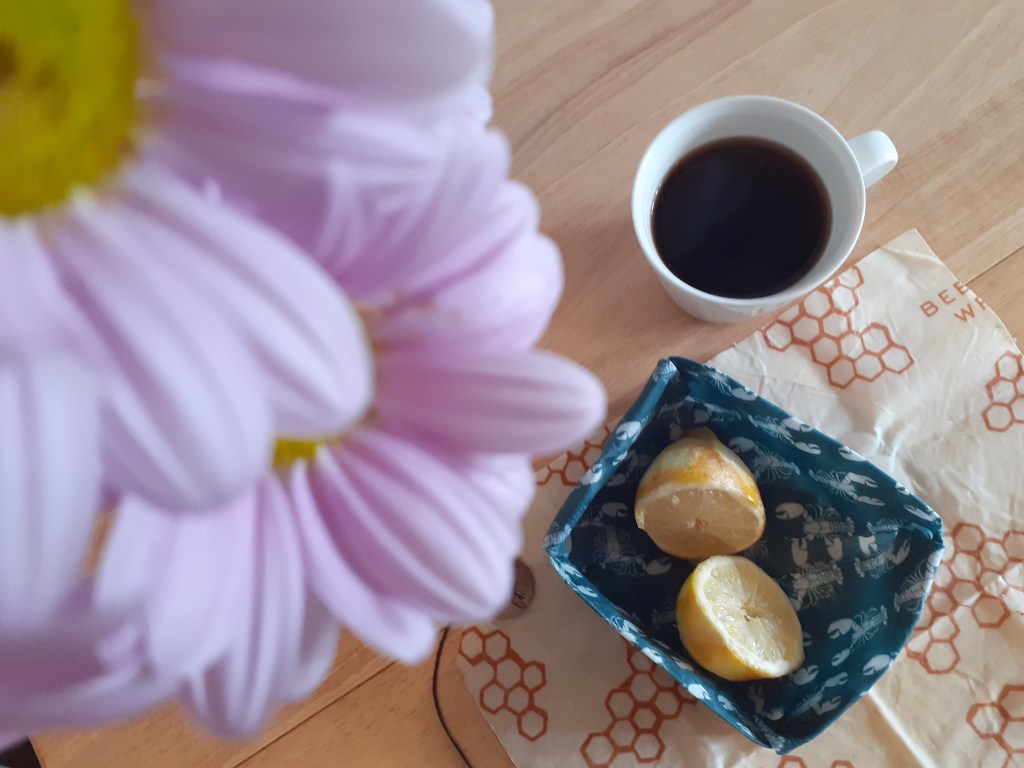
Well sort of.
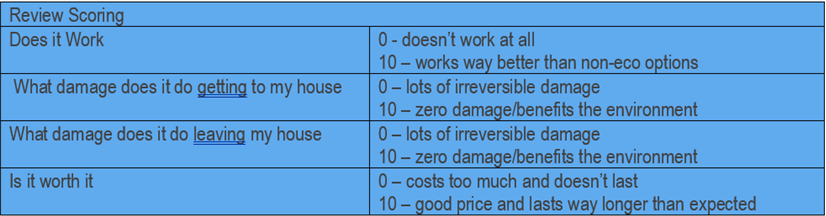
As someone who’s been fiddling with wax wrappers for a while now, I figured it was worth a review, and so here we all are. Seatbelts on for this one, its a long one. Follows the same setup as normal, just with more words in the first two sections. And a little background info on the exact wax wrappers I’ve got. As always, 30 second summary at the bottom for all you busy bees.
A bit of background before we start
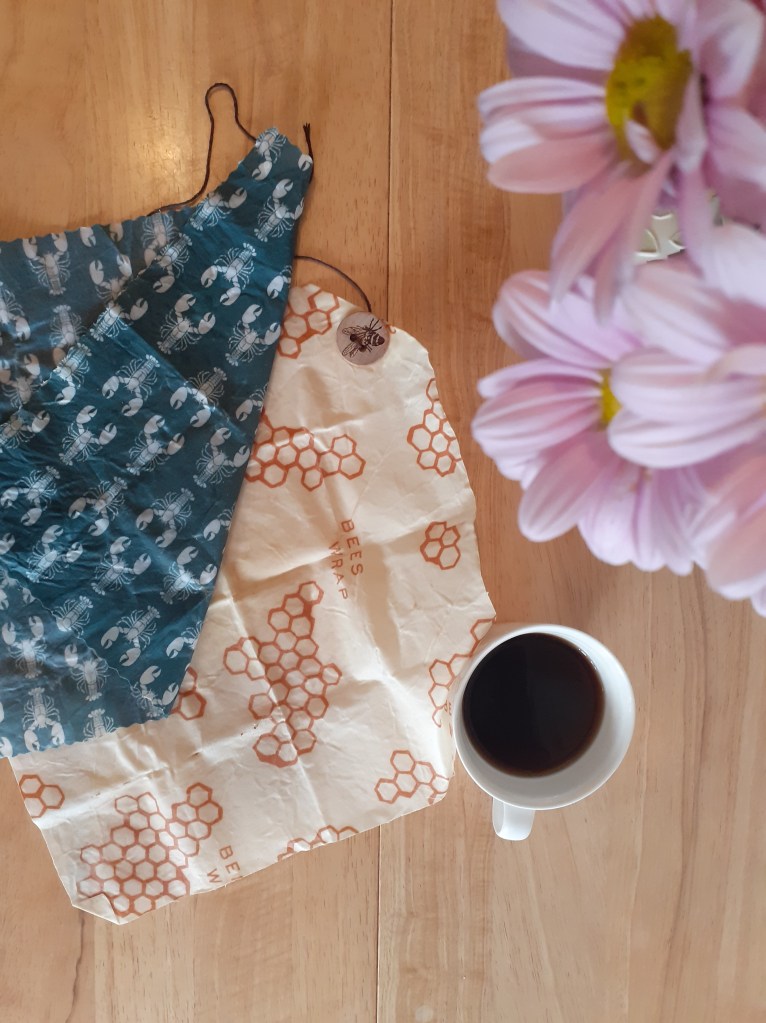
It feels like wax wrappers have been popping up everywhere over the past couple of years. The idea is simple, pieces of cotton are infused with beeswax (and sometimes other stuff like essential oils) to make a bit of fabric you can wrap food in instead of using clingfilm or plastic bags. Lovely. And to keep up with the times, you can now get vegan ones too (sadly not reviewed here since my beeswax wrappers are still going strong). You can buy the wraps from all over. I have two types, one that I got from a national trust gift shop in a moment of weakness, made by bees wrap (https://www.beeswrap.com/), and another set of three medium size ones I found on holiday at a gift shop in another moment of weakness, made by beeswax wraps (https://www.beeswaxwraps.co.uk/). This is what they look like.
Using it – does it work
Right first up, you need to be careful where you source your wraps from if you ever deal with severe nut allergies – some companies (inc. both the ones I use) add pine resin and jojoba oils to their wraps and both of these are nut derivatives. This is something I really wasn’t aware of until I did the research for this post. It’s never been a problem for me so I didn’t think to look for that type of info on the packaging so couldn’t say if you should expect it to be clearly labelled.
Now, actually using them. I found that these didn’t replace cling film for me, instead they sort of carved out their own role somewhere between cling film and Tupperware. To properly explain how I’ve found using them, and answer common questions I’ve heard from people, I’ve put three little lists together.
The Good
- They mould well. I find them easier to shape onto something than tin foil because they really do respond to the heat in your hands (even on a cold day).
- They don’t smell or pick up flavours. Even when food has gone off in them previously, they never smell and we’ve never had any cross contamination of flavour.
- They’re great for wrapping odds and ends of fruit and veg (e.g. leftover lemon from g&t slicing, avocado halves) and they are a bit of a cheese game-changer if you’re looking for a zero-waste cheese wrap.
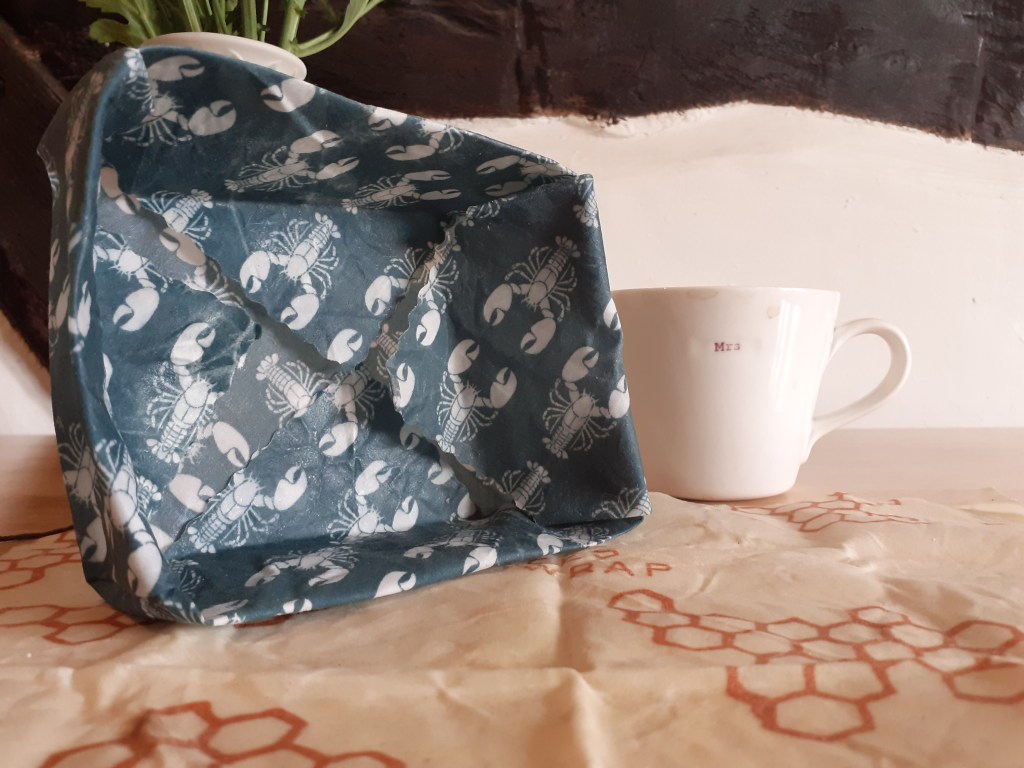
- If you like origami you can have all sorts of fun making (useful?) shapes – see below.
The Bad
- They don’t replace clingfilm. While they’re great for wrapping veg or covering a bowl, I’ve never managed to get an airtight seal with them, and you can’t use them on meat so I have still needed clingfilm at times.
- Again with the airtight issue, I find with cheeses like brie which grow a skin, this happens faster when wrapped with the beeswax wrap than when wrapped with the original paper/plastic packaging. This could be because as they get older, the wraps start cracking and so they’re no longer fully coated with wax. Could possibly solve the issue by refreshing the wraps (see point below) but I’ve never felt the need to go to all that effort.
- Cleaning them is a nightmare! You can’t use warm water on them (I tried, it nearly ruined my favourite one), so instead of just chucking it in with the rest of your washing up you have to specifically set aside time to wash them with cold soapy water. This does work, but it annoys me a bit and I have ended up just using anti-bac on them sometimes – haven’t died yet.
- You’re meant to ‘refresh’ them. I tried this once following an online tutorial found suggesting you pop them in an oven for a minute. It’s not done much to it other than melt some of the wax off. The actual beeswax wrap website sell a block of wax to shave onto your wrap and melt in – in all honesty, I’m not around for that kind of phaff and have never bothered with it.
- You’re meant to buy new ones once a year if you use them regularly. Hmmm.
The Ugly-ish
They require a bit of habit unlearning to use them. I found I didn’t use them for ages because I would just forget I had them. Despite keeping them near the clingfilm I was just so in the habit of grabbing clingfilm I’d be halfway through pulling the film out before remembering I had the wraps. Now I’ve managed to get used to trying the wraps first, and then going to clingfilm or plastic bags if I need it, but it took time and a bit of stubborn determination.
I do need to also mention that, in most situations, I’ve found tupperware is just as good, if not better to use than a wrap. Just putting that out there. So using it. Yes they behave the way they say they do, but they are a real phaff to get to grips with, they don’t fully replace cling film, and they have no advantages over tupperware. So really, 5 out of 10 I think.
What damage does it do getting to my house?
So, the basic ingredients of the wraps I own are cotton, beeswax, tree oils, and jojoba oil. The main points to worry about are, where and how is the cotton grown, how is the beeswax harvested, and what process do the oils go through.
Cotton is very water intensive to grow, and in some areas of the world it’s also grown with exploited labour (not technically a ‘eco’ issue but definitely still an issue worth noticing). Both wraps use GOTS certified cotton (Global Organic Textile Standard). The GOTS standard is good because it requires more than just no-chemicals in production to include sustainability criteria that cover water consumption, it also has a social level too requiring all labour to be freely chosen. So the fabric is all set.
Beeswax next. So bees are quite precious. Industrial beekeeping can actually harm bees in an attempt to increase yields so ideally beeswax will be sourced from sustainable and considerate suppliers. ‘Beeswrap’ specify sustainably sourced beeswax in their sources, however I can’t find any solid certification for this. They say they are involved with a charity called ‘The Bee Cause’ but, from looking at this charities website, there doesn’t seem to be any kind of certifying or assurance service offered by them. The other company ‘Beeswax Wraps’ also don’t state any solid sustainability commitment, merely stating they use locally sourced beeswax. This could mean anything, they might be using wax from local hobby beekeepers, or they could be based right next to a massive bee farm. So they’re a bit meh on this point.
Lastly oils and resins. Jojoba oil seems pretty ok, fairly lowkey effort to grow, grows in most arid places, and can’t find any scandals about farming it. Likewise, I can’t find any nasties on pine resin. So I think these two are fine
That leaves the last, and most significant, aspect of getting to our houses – air miles. This will vary for everyone but here in the UK we have beeswax wraps producing in Gloucestershire and they’re the ones using locally sourced beeswax too. So that’s pretty close. I’d say producing has relatively low negative impact if the air miles are kept down, which is fab, so I’m giving them 8 out of 10 for this section
What damage does it do leaving my house?
They’re compostable, or you can burn them. Nice and easy. Burning seems a bit wack, it’ll inevitably release carbon directly into the atmosphere. The components involved shouldn’t release anything toonasty nasty as far as I know though. Otherwise, composting is awesome – just stick it in the industrial compost not your backyard compost because jojoba’s not native to England and might make things a bit odd. I’m going to give them 10 out of 10 here. Composting is fab, and definitely gives back to the environment a little bit, and burning stuff is fun.
Is it worth it?
Hmmm, they’re good fun (look awesome in a picnic basket) but beyond that they don’t really add value. I’m tempted to say that while tupperware is still alive and kicking, if it’s a choice between the two then tupperware wins on all points. Especially good quality stuff. I know the beeswax wraps are better for the environment in the long run because compostable, not plastic etc. But I have tupperware that once belonged to my Gran in my cupboard, whereas a beeswax wrap would need to be replaced every year and so we’re actually comparing one piece of tupperware to 50+ beeswax wraps and when you look at it like that? You’re paying 50 x £15, which is £750. Quite an expensive product. In terms of worthwhileness this gets a 3 from me, it’s only functional value is how pretty it is – and sadly in the long run your paying through the nose for it (so often the case with pretty things).
Sound harsh? Let me know what you think down below.
Summary
- They don’t fully replace clingfilm, but they are do wrap food well.
- They don’t smell or transfer flavours.
- Cleaning is a phaff.
- And they do wear out after a year of frequent use.
- They’re fully compostable though – very excellent.
- Low air miles, and organic cotton (GOTS trademark) are things to look out for when buying.
- Often use nut derivatives like jojoba oil so not good for allergies.
| Does it Work | Damage getting to house | Damage leaving house | Is it worth it | |
| Beeswax Wraps | 5 | 8 | 10 | 3 |
And there we have it. Hope you enjoyed it, let me know what you thought below. Do you use beeswax wraps? Disagree with me saying tupperware is better?
 Does it Have to Cost the Earth