
If you’re one of the many who are looking for a bit of a staycation this summer then you might have noticed that every campsite who thinks their anything are now not only providing loos, showers, and a 20% price hike, you can also buy eco-friendly logs! As if camping couldn’t get swankier. Ironically, a lot of campsites aren’t actually providing loos or showers anymore because of covid, but what does that matter when you can buy an eco-friendly log or two.
Naturally then, when we were pootling around our trusty ol’ garden centre and saw a display of ‘eco’ logs in the flesh, we couldn’t not buy them. From a brand called bio-bean, they’re made from used coffee grounds that are compacted into little cylinders, and here, is the lowdown on them.
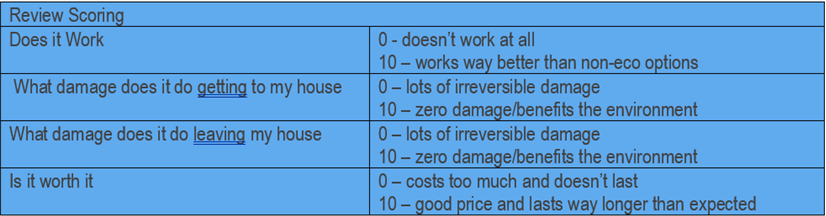
As usual, here’s how scoring works, and there’s a 30 second summary at the bottom of the page. Enjoy!

Using it – does it work
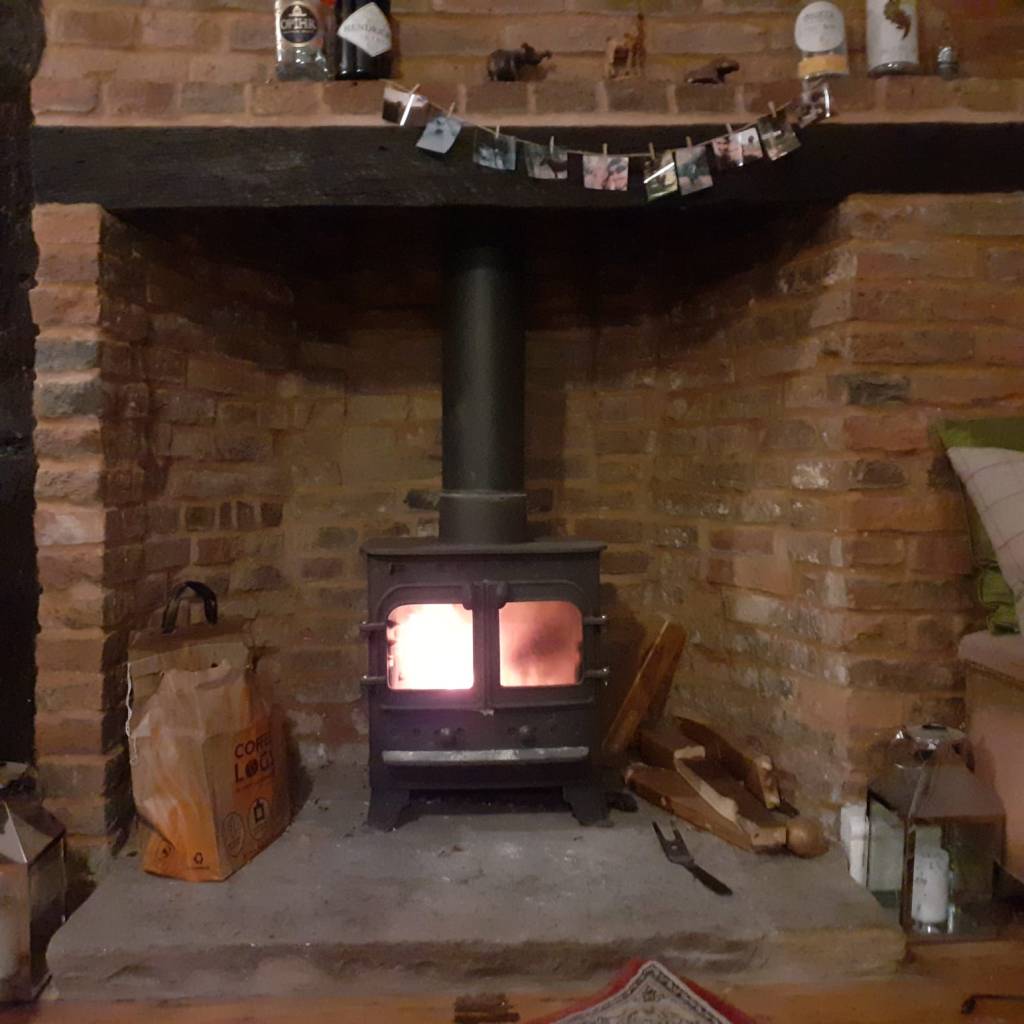
These are excellent in a woodburner but they suck as a campfire. In the woodburner they packed a real punch in heat, and burnt for a long time – which is saying something when you consider that our woodburner leaks and draws way too much air even when it’s closed down. More importantly, they burnt with a good flame, and with a nice orange flame behind the glass of the burner it looked just as homely and inviting as when wood is in there. The only issue is they wouldn’t look nice and rustic when stacked up like standard wood does, but you could probably find a nice wicker basket to store them in without losing too much homeyness.
In the open air, things were very very different. We tried a few scenarios but the logs needed to be a lot hotter than ordinary wood to burn well and they just couldn’t get there. The most we got was a fire built with about three times the normal amount of kindling, producing some small bunsen burner type flames and a fair amount of smoke. Not ideal for a cosy evening of marshmallow roasting and whisky sipping. To give biobean a fair hand though, while they have called these coffee ‘logs’, the subtext does specify them as a fuel substitute for stoves and woodburners and makes no mention of open fire. So I feel we can’t really slate them for that – it was still a worthwhile test though.
So do these work? It’s a mixed bag, if you spot them at a campsite, steer well clear, but if you’ve got a woodburner and can store them prettily, they’re great. Since they are advertised as a fuel source for stoves and woodburners, and not as a wood substitute, I’m going to review them based on how well they suited the woodburner. Which means, given they worked way better than wood with only a small décor matter to overcome, I’m going to give these 10 out of 10. They’re more efficient than wood and still super easy to use. We like.

What damage does it do getting to my house?
Minimal damage I think. These are made from used coffee grounds. Ordinarily used coffee grounds would get sent to landfill, and would produce a lot of methane as they decomposed – a very sucky thing to happen since methane is a greenhouse gas, and doubly frustrating since used coffee grounds have a lot of potential for reuse. Now I couldn’t find much information on how they’re made. I think at some point the wet grounds get dried, but beyond that I can only guess that either a lot of pressure is exerted to get the grounds to then stick together, or something is added to bind them together. And this doesn’t give us a huge amount to go on to measure the impact of making the logs. However, given that the process of making the logs involves stopping a large amount of grounds going to waste and the bio-bean ethos seems to focus on sustainability, I think we can be pretty confident the impact on the environment of making these is minimal, if not positive. And since they are made predominately by recycling a used material, I’m going to give them 8 out of 10. It would be closer to 10 if we had more info on the production process.
What damage does it do leaving my house?
Things are a bit more convoluted here, because there are several factors to take into consideration – particularly if we want to compare coffee logs to wood. The short story is that regardless of how awful they get when they burn, they would have been a lot more awful is they’d decomposed in a landfill and so get 10/10. The long story is worth a read though.
I will start by making a very very very tentative suggestion that I think burning these coffee logs might be less directly damaging to the environment than burning wood. This is because, assuming wood and coffee are similar enough in composition to emit similar levels of greenhouse gases, the coffee logs burn hotter, and so burn more efficiently, and efficient fires emit less particulates (i.e less greenhouse gases). However, this is a big assumption, and so please please take it with a pinch of salt.
A more important factor to consider is the fact that, while burning coffee logs does lead to greenhouse gas emission, compared to how much gas would have been emitted if the coffee grounds had been composted the emission from burning is significantly less. The big stat that bio-bean like to throw around is that burning these coffee logs produces 80% less emissions than if they had gone to landfill. This is a big saving, and for this alone I’m going to give the logs 10/10 for damage leaving the house.
However, I do have to throw a spanner in the works, because I actually think that coffee logs are not that suitable as a substitute for wood in domestic woodburners; despite their apparent benefit to the environment. This is because when wood is produced responsibly, it can have great benefits for the environment and local economy that would be lost if we all switched to coffee logs. Someone who manages woodland well knows that in order to promote ecological diversity, sometimes trees have to be cut down – and promoting good management of woodland is so important in order to maintain and renew diversity in our ecology. This in essence makes wood a by-product of managing woodland, and it makes sense to use that by-product where possible. Now I know there are other uses for wood in furniture, and that is a fair point, but even then not all wood is suitable for crafting with. Furthermore, from my experience, suppliers of wood tend to be local small businesses which deliver to a local area. This keeps the travelling costs down, and it also keeps these people in work. If we all switched to coffee logs, these people with all their skills in managing woodland would be out of a job, and the woods we love would not be as well managed. So often tackling climate change is not about grand initiatives that save the whole world in one go, but about small steps in our local areas that bolster the environment bit by bit – and that is the case here. The technology behind coffee logs is brilliant and has so much potential in commercial settings as a heat source for boilers, factory ovens, all sorts. But until managing woodland is valued enough to be a job in its own right, when it comes to domestic fuel sources, I believe there is a strong case to be made for promoting responsibly sourced, well dried wood from local producers.
Is it worth it?
If you’ve made it this far – well done! After that long rant, I’ll try and keep this bit short. So, is it worth it? Price wise they’re fairly similar. We find that half a load of wood keeps us going throughout the colder months, and also covers the odd campfire here and there in the summer – and that usually costs about £60 to £65. A rough estimate of what the equivalent in coffee logs would be is about 90 logs, plus some wood for campfire use. For just the coffee logs that totals about 6 bags, which is about £54, and then you’d need about £14-21 for 2-3 wood bags in the summer, provided you could source some. That puts them on a pretty even keel in terms of cost.
Getting hold of coffee logs is no more fiddly than ordering wood, and they keep for just as long and are simpler to store since they’re smaller (although not prettier). However, wood for open fires does have to be bought separately (and at a higher price) and would still have to be stored well so you haven’t totally subverted the fuss of using wood. As such, given it’s a similar price but still a little more phaff, they’re going to get 8/10. I’ll leave you to make your own mind up on the earlier points raised about managing woodlands and woodburning.
Summary
- Don’t work with an open fire.
- Work brilliantly in a woodburner.
- Uses mainly recycled product that could otherwise have gone to landfill and generated lots of greenhouse gas so great for the environment.
- Bio-bean stat is that using coffee grounds in this format emits 80% less greenhouse gases than if they had gone to landfill.
- Similar price to normal wood.
- Possible that switching to coffee logs over wood could undermine business of local woodsman which could be a bad thing because local woodsman know how to manage a woodland sustainably and we don’t want to lose these skills.
- Since coffee logs have so much potential for commercial use, uptake in the domestic sector may not be necessary for their survival – unlike in the local wood sector.
| Does it Work | Damage getting to house | Damage leaving house | Is it worth it | |
| Bio bean Coffee Logs for Woodburner | 10 | 8 | 10 | 8 |
So there we have it, let me know what you think down below – anyone used an eco-log, did it work in an open fire setting?
 Does it Have to Cost the Earth